

Composite Dental Fillings Explained
At Sunshine Dentistry, composite dental fillings offer a conservative, tooth-colored way to repair cavities, small fractures, and worn edges.
This page explains what composite fillings are, how the procedure works, benefits and limits, and what to expect before and after treatment with Dr. Kambiz Ardjmand.
Why Tooth-Colored Fillings?
Composite materials are versatile and can restore front and back teeth when damage is mild to moderate. They bond directly to your tooth, allowing precise repairs that match your natural enamel.
Benefits of Composite Fillings
Natural Appearance
Matches tooth color and translucency for a seamless look.
Strong Bonding
Supports remaining tooth structure with reliable adhesion.
Conservative Prep
Often removes less healthy enamel than metal fillings.
Versatile Use
Suitable for cavities, chips, and minor shape corrections.
Quick Placement
Typically completed in one visit.
The Filling Process
Assessment & Shade Match
The tooth is examined, X-rays may be taken, and a shade is selected for a seamless blend.
Numbing & Preparation
Local anesthetic keeps you comfortable while decay or damaged areas are removed.
Tooth Conditioning
The surface is etched, primed, and bonded for a strong link between tooth and filling.
Layering & Shaping
Composite is applied in small layers, sculpted to natural contours, and light-cured.
Finishing & Bite Check
The restoration is polished and the bite adjusted so chewing feels even.
Composite dental fillings are tooth-colored restorations made from a blend of resin and finely ground glass. They are bonded directly to your tooth, allowing precise repairs that match your natural enamel. Many patients search for “what are composite fillings” and “how do composite fillings work” because they want a natural look without sacrificing function. Composite materials are versatile and can restore front and back teeth when damage is mild to moderate.
Composite vs. Amalgam
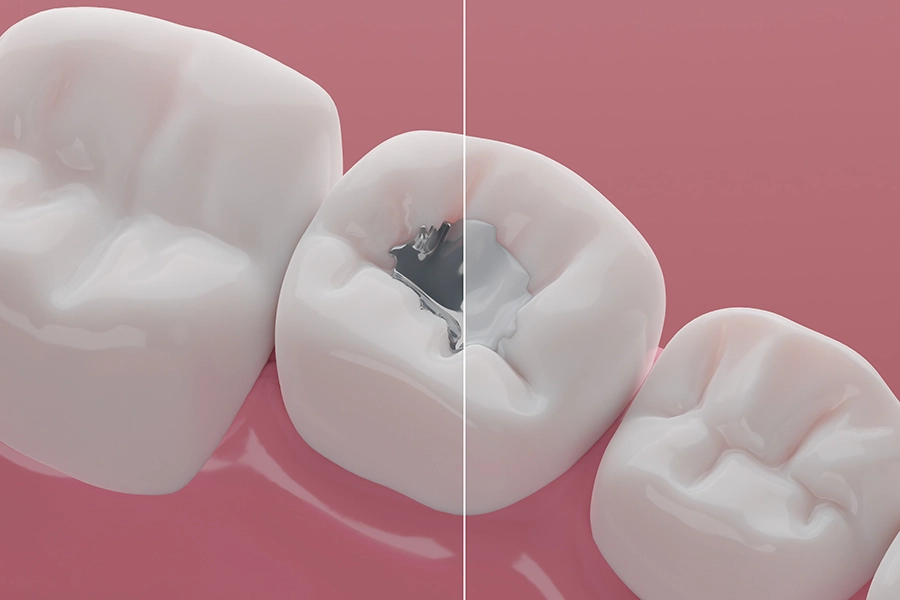
Compared with silver amalgam, composite fillings blend with your smile and can preserve more natural tooth structure because they bond to enamel and dentin. Composites are technique-sensitive and must be placed in a dry field to last. Amalgam can be more forgiving in wet conditions and may outlast composites in very large, high-stress restorations. dentist may discuss which option fits the tooth’s size, location, and your goals.
Why Consider Composite Dental Fillings?
- Natural appearance that matches tooth color and translucency.
- Strong bonding that supports remaining tooth structure.
- Conservative preparation that often removes less healthy enamel.
- Versatile use for cavities, chips, and minor shape corrections.
- Quick placement that is typically completed in one visit.
How Composite Dental Fillings Work
- Assessment and shade matching: The tooth is examined, X-rays may be taken, and a shade is selected for a seamless blend.
- Numbing and preparation: Local anesthetic keeps you comfortable while decay or damaged areas are removed.
- Tooth conditioning: The surface is etched, primed, and bonded to create a strong link between tooth and filling.
- Layering and shaping: Composite is applied in small layers, sculpted to natural contours, and light-cured to harden.
- Finishing and bite check: The restoration is polished and the bite is adjusted so chewing feels even.
What to Expect
Before your appointment, eat a light meal and share your medical history and medications. Most composite fillings take about 30 to 60 minutes per tooth, depending on size and location. After treatment, wait until numbness wears off before chewing to avoid biting your cheek or tongue.
It is common to feel brief sensitivity to cold, heat, or pressure for a few days. If your bite feels “high” or discomfort persists beyond one to two weeks, a quick adjustment may help. With proper care, many composite fillings last 5 to 10 years or longer. Longevity depends on the filling’s size, tooth location, your bite forces, and habits like teeth grinding.
Care tips include brushing twice daily with fluoride toothpaste, cleaning between teeth, reducing frequent snacking on sweets, and wearing a night guard if you grind your teeth. Dark beverages can stain margins over time; regular cleanings help keep edges smooth and clean.
If you have questions about composite dental fillings in San Diego, CA, or would like an exam, contact Sunshine Dentistry at 619-282-1007 to schedule with our dentist, Dr. Kambiz Ardjmand.
Frequently Asked Questions About Composite Dental Fillings
Composite fillings are very durable for small to moderate cavities and provide strong bonding to tooth structure. For very large areas under heavy chewing, alternatives such as onlays or crowns may be recommended.
Many last 5 to 10 years or more with good hygiene and routine checkups. Smaller fillings on front teeth often last longer than large fillings on molars exposed to heavier forces.
Local anesthetic keeps you comfortable. You may notice mild sensitivity for a short time afterward, which usually improves within several days.
Dental composites are widely studied and considered safe. Many modern materials are BPA-free or very low in BPA derivatives. If you prefer BPA-free options, ask during your visit.
Small chips or rough edges can often be smoothed or repaired. If a filling cracks, loosens, or falls out, contact [practice_name] in [city], California for an evaluation.
When decay or fracture removes a large portion of a tooth, a crown or onlay may provide better long-term strength than a large filling. [dr_type] will review options based on the tooth’s condition.
Need a Tooth-Colored Filling?
If you have questions about composite dental fillings in San Diego, CA, or would like an exam, contact Sunshine Dentistry at 619-282-1007 to schedule with our dentist, Dr. Kambiz Ardjmand.